

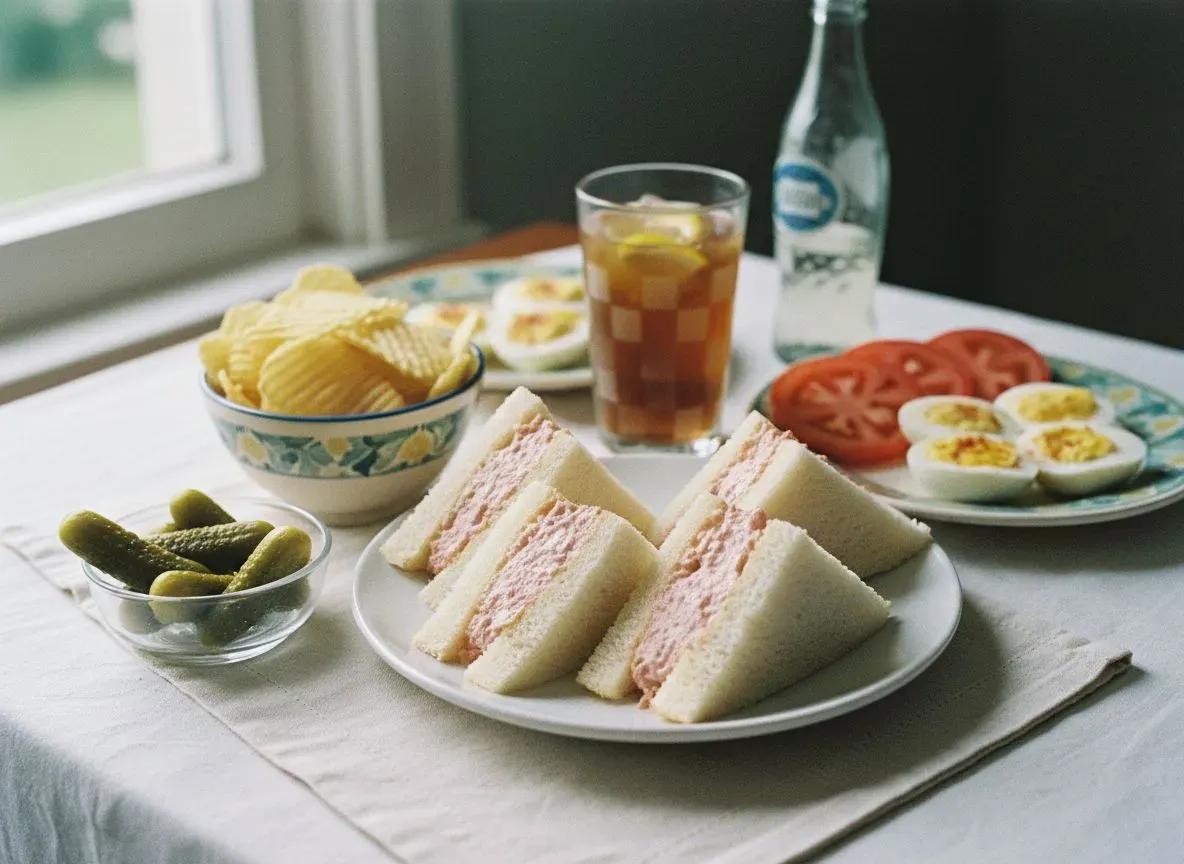
Sandwich Spread Lunch
Before deli cases, meal kits, and pre-made salads, many Michigan households relied on simple sandwich spreads to get through the workweek. Among the most common was a chopped ham-and-bologna spread mixed with eggs, onion, celery, and mayonnaise. It was not flashy. It was dependable.
This spread showed up in factory towns, farm kitchens, and lakeshore cottages from the 1930s through the 1950s. It filled lunch pails and picnic baskets at a time when food needed to be affordable, filling, and easy to pack.
Built for Michigan Workdays

Michigan’s economy shaped how people ate. Auto plants, foundries, lumber mills, sugar beet fields, and docks all ran on schedules that left little time for long lunches. Meals had to be made ahead and eaten cold.
Sandwich spread fit those needs.
It could be prepared the night before, stored safely, and eaten quickly. A single batch stretched leftover meat into several meals. For many families, Sunday dinner ham became Monday’s lunch without waste.
This approach matched a broader pattern in Michigan kitchens: reuse, stretch, and keep it simple.
A Familiar Pattern in Local Food

The sandwich spread followed the same logic as many Michigan food traditions. It was practical first, flavorful second.
Comparable Michigan favorites include:
Ham salad and bologna salad found in church cookbooks
Deviled eggs, often made in bulk for gatherings
Potato salad, heavy on mayonnaise and light on seasoning
Pasties, built to be filling and portable
Fish spreads made from smoked whitefish along the Great Lakes
All shared a common goal: provide energy, travel well, and feed more people than expected.
What Made the Spread Work

The appeal of sandwich spread was not one ingredient but how everything worked together. Each part served a purpose.
Key elements included:
Processed meats: Affordable and easy to store
Hard-boiled eggs: Added protein and body
Onion and celery: Provided crunch and contrast
Mayonnaise: Bound the mixture without overpowering it
Nothing was measured tightly. Recipes changed by household and by season. The method stayed the same.
Served the Michigan Way

In most homes, the spread went onto soft white bread. That bread compressed easily, absorbed moisture, and held together in a lunch pail.
Typical pairings included:
Potato chips or corn chips
Pickle spears or sweet pickles
Applesauce or canned fruit
Iced tea or soda
At summer gatherings near lakes or parks, the spread often shared table space with hot dogs, baked beans, and Jell-O salads. In winter, it showed up alongside soup or leftovers.
How It Compared to Other Lunch Choices
By the late 1950s, sandwich spread began competing with new options. Grocery stores offered sliced deli meats. School cafeterias expanded menus. Fast food crept into towns.
Still, the spread held its place longer than expected.
Compared to deli sandwiches, it was cheaper. Compared to canned soups, it was more filling. Compared to hot lunches, it required no reheating. For many families, those advantages mattered more than novelty.
Why It Still Belongs
Today, this sandwich spread reads as old-fashioned. Yet its strengths remain clear. It uses inexpensive ingredients, comes together quickly, and reduces waste. In an era of rising food costs, those traits feel relevant again.
For Michigan kitchens shaped by long winters and practical habits, this recipe fits the same role it always has. It is not about trend or presentation. It is about making lunch work.
And for generations of Michiganders, that was reason enough.