

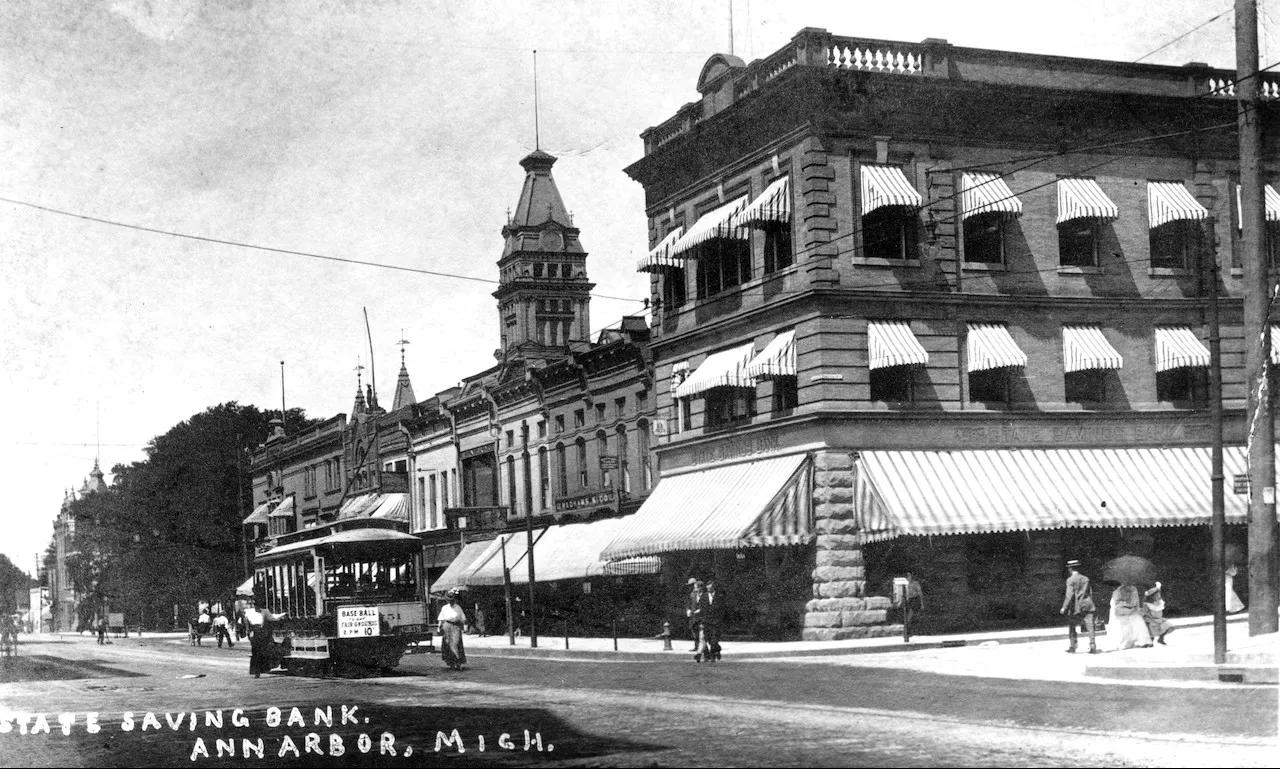
Ann Arbor c1910
Ann Arbor did not grow quietly. From its earliest years, public life unfolded in the open. Streets, meetings, and shared spaces mattered. When something affected the future of the city, residents gathered and acted together.
The history of Ann Arbor Michigan begins in the 1830s as a small frontier settlement. That changed in 1837 when the University of Michigan relocated from Detroit. Forty acres were set aside for a campus, and the town’s direction shifted almost overnight. Students, faculty, and staff arrived, and Ann Arbor began growing around education and ideas rather than industry alone.
Railroads strengthened that growth. In 1839, the Michigan Central Railroad reached Ann Arbor, linking the town to Detroit and beyond. Trains brought people, goods, and information daily. By the late 1800s, the stone Michigan Central depot stood as a physical marker of connection and mobility.
Civic Debate in Public View
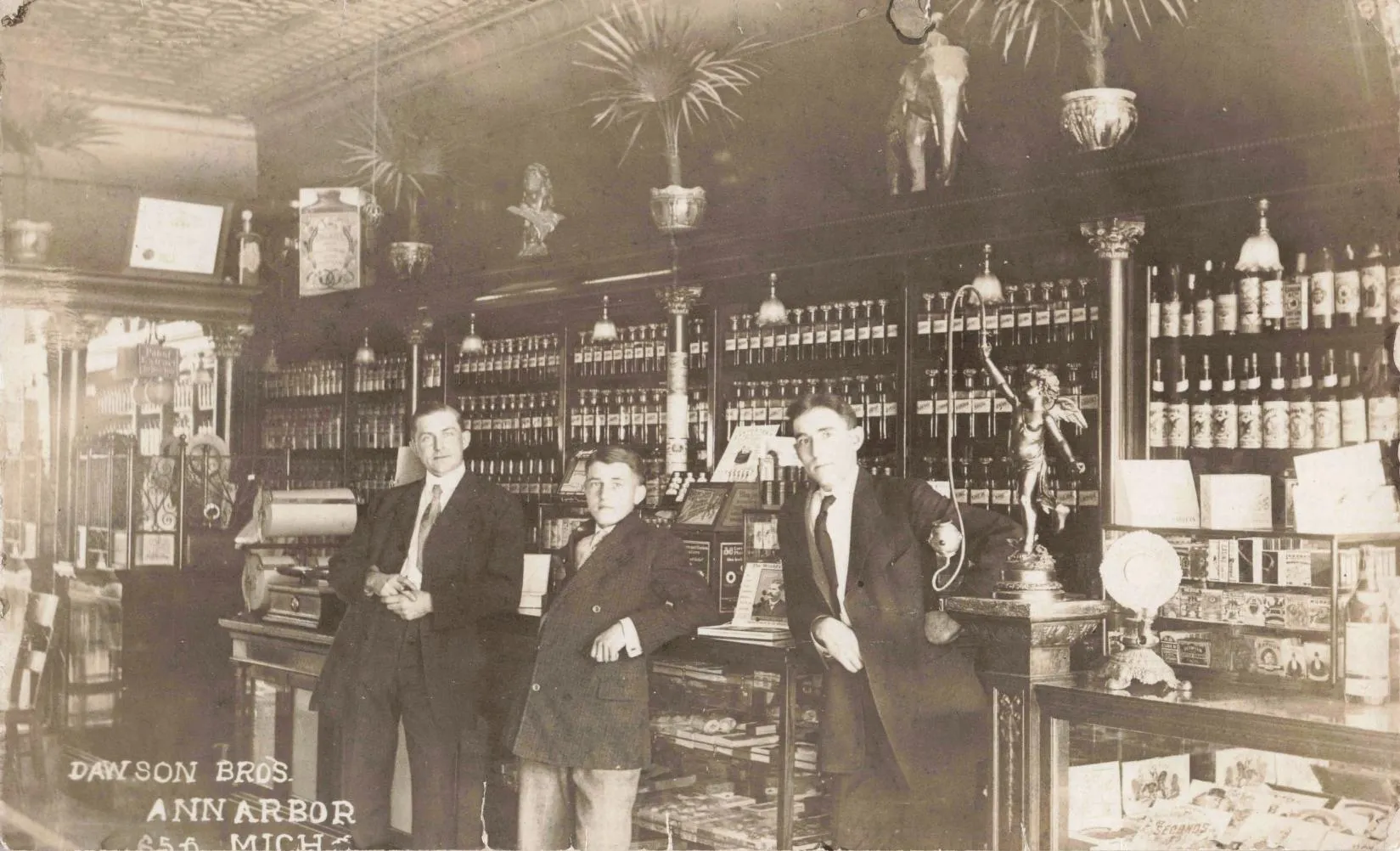
As Ann Arbor grew, tensions followed. German immigrants opened breweries and saloons, while temperance advocates pressed for alcohol restrictions. These disagreements did not stay behind closed doors. They unfolded in public.
A 1908 photograph shows a local option parade filling downtown Ann Arbor. Men, women, and children march together, holding signs calling for a vote on alcohol laws. Streetcar tracks run beneath their feet. Brick storefronts frame the scene. The image confirms something important about the history of Ann Arbor Michigan: civic debate was visible and communal.
Daily Life on Changing Streets
Everyday life reflected a city in transition. Delivery wagons moved goods through muddy streets. Corner groceries served nearby neighborhoods. Horse-drawn vehicles shared space with early automobiles. Old and new operated side by side.
Municipal investment followed. A city waterworks brought clean water and improved fire protection. Electric lighting replaced gas lamps. Brick paving replaced dirt roads. These improvements were practical, but they also signaled permanence. Ann Arbor was no longer temporary or provisional.
Parks, Leisure, and Public Space
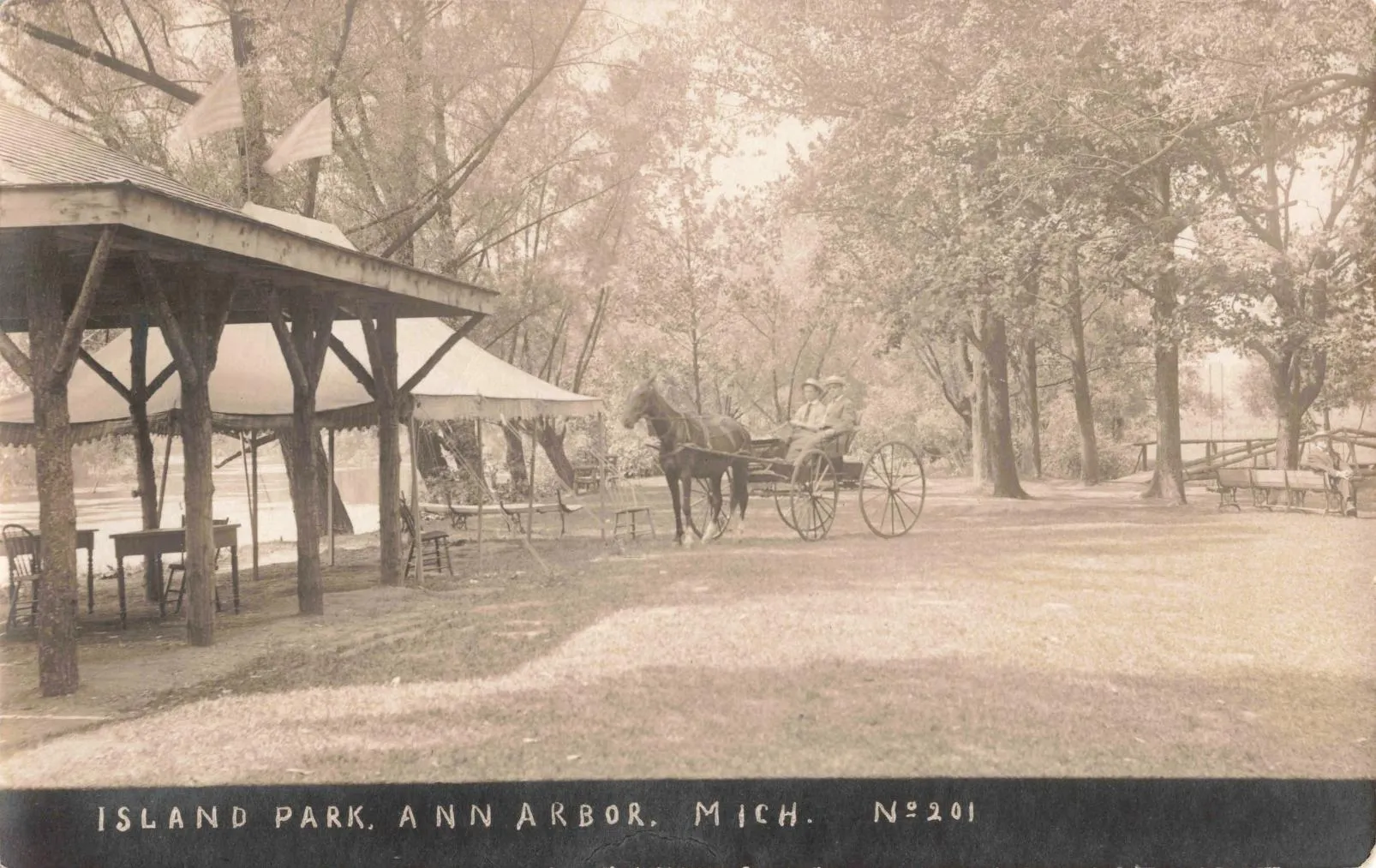
Public leisure mattered. Island Park along the Huron River offered shade, picnic tables, and room to breathe. Families arrived by carriage for afternoon visits. Later, places like Gunther Gardens promised organized outings, garden parties, and social gatherings.
These spaces show another side of the history of Ann Arbor Michigan — a city that valued shared time as much as shared labor.
Transportation and Trade
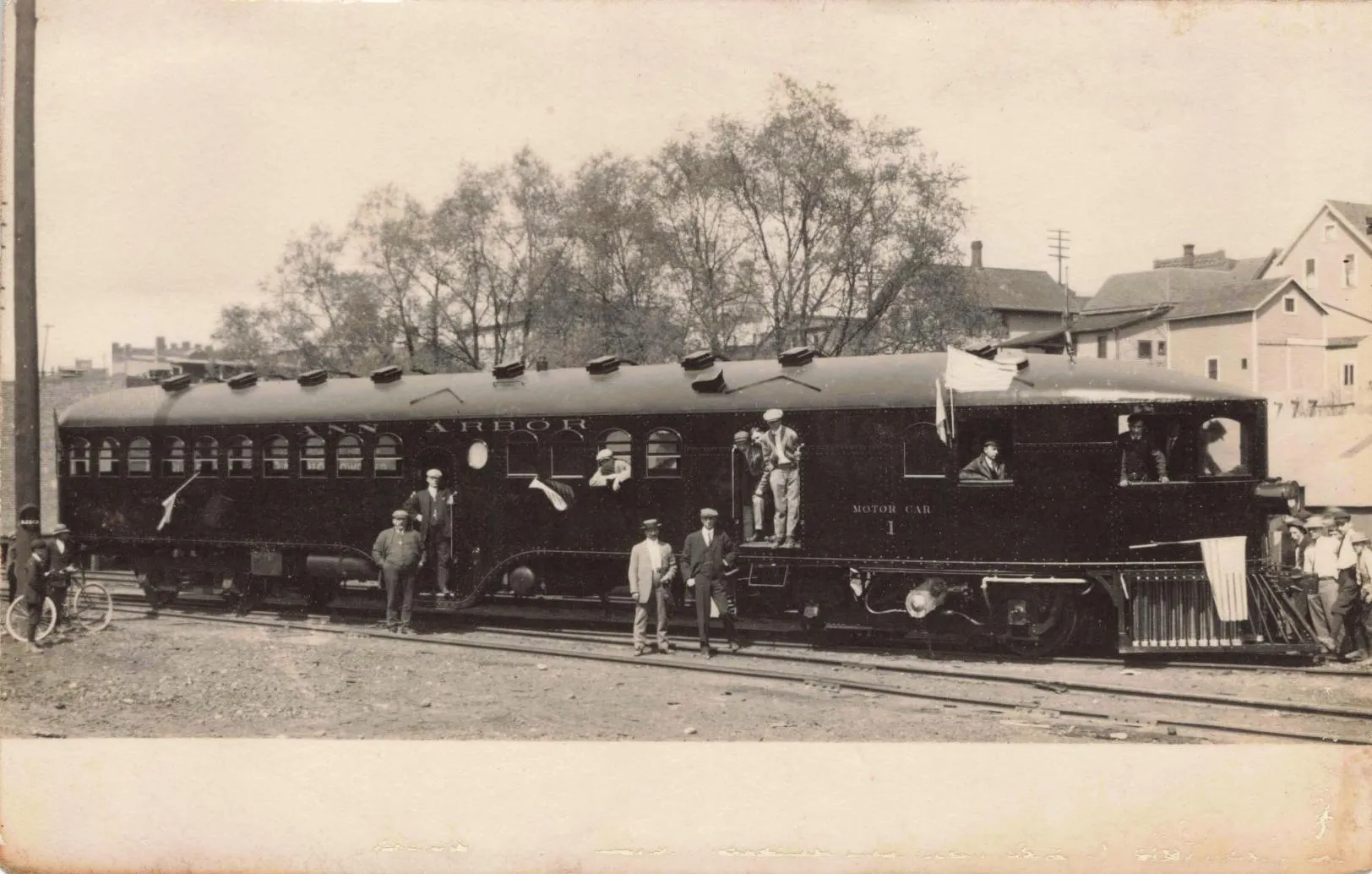
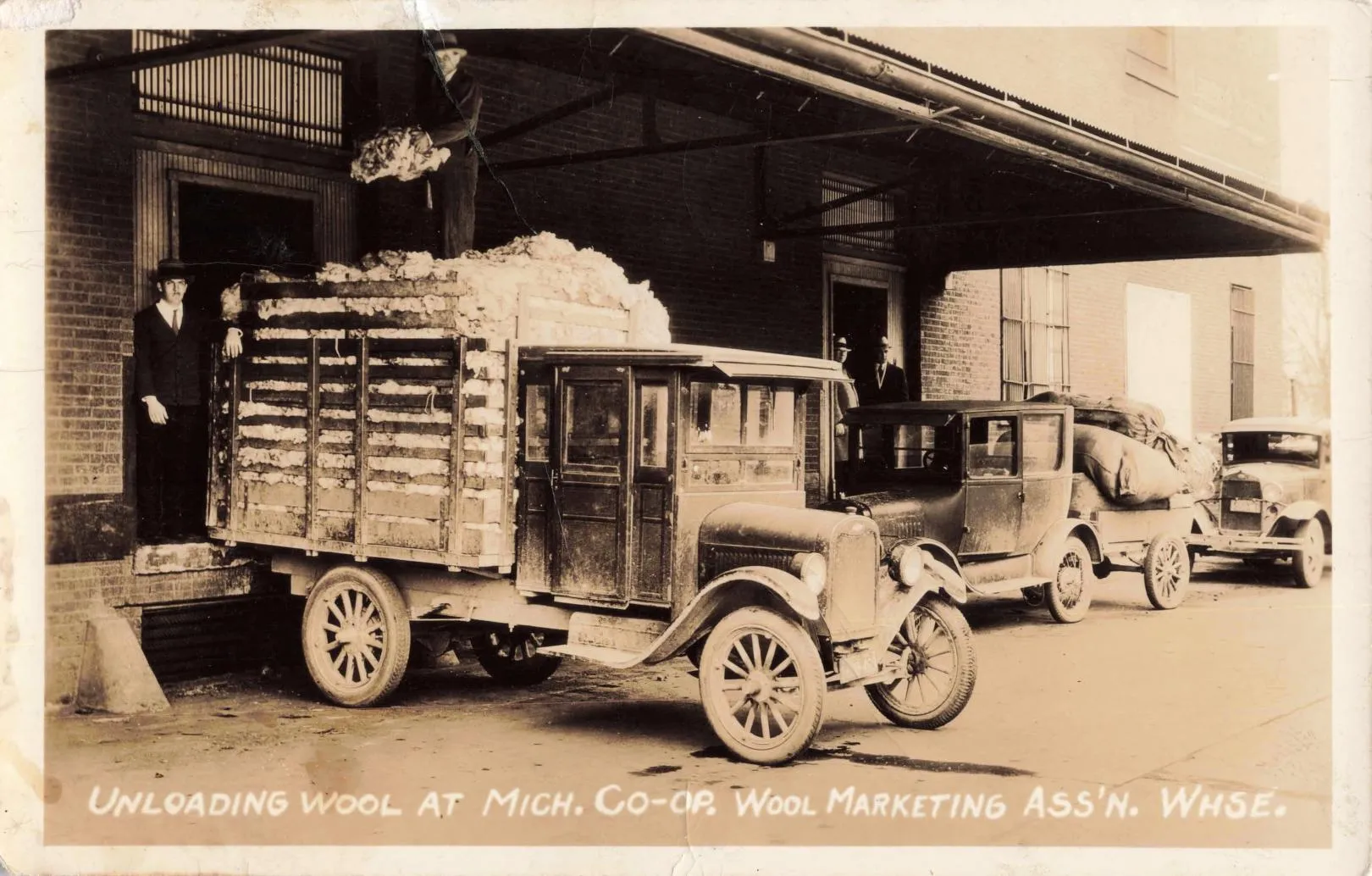
Transportation continued to evolve. Streetcars linked neighborhoods and connected Ann Arbor with nearby Ypsilanti. Eventually, buses replaced trolleys. Trucks increasingly handled freight, including agricultural goods unloaded at cooperative warehouses near downtown.
Rail remained important, but Ann Arbor adapted rather than resisted change. Each transition reshaped how people moved, worked, and gathered.
University and City, Side by Side
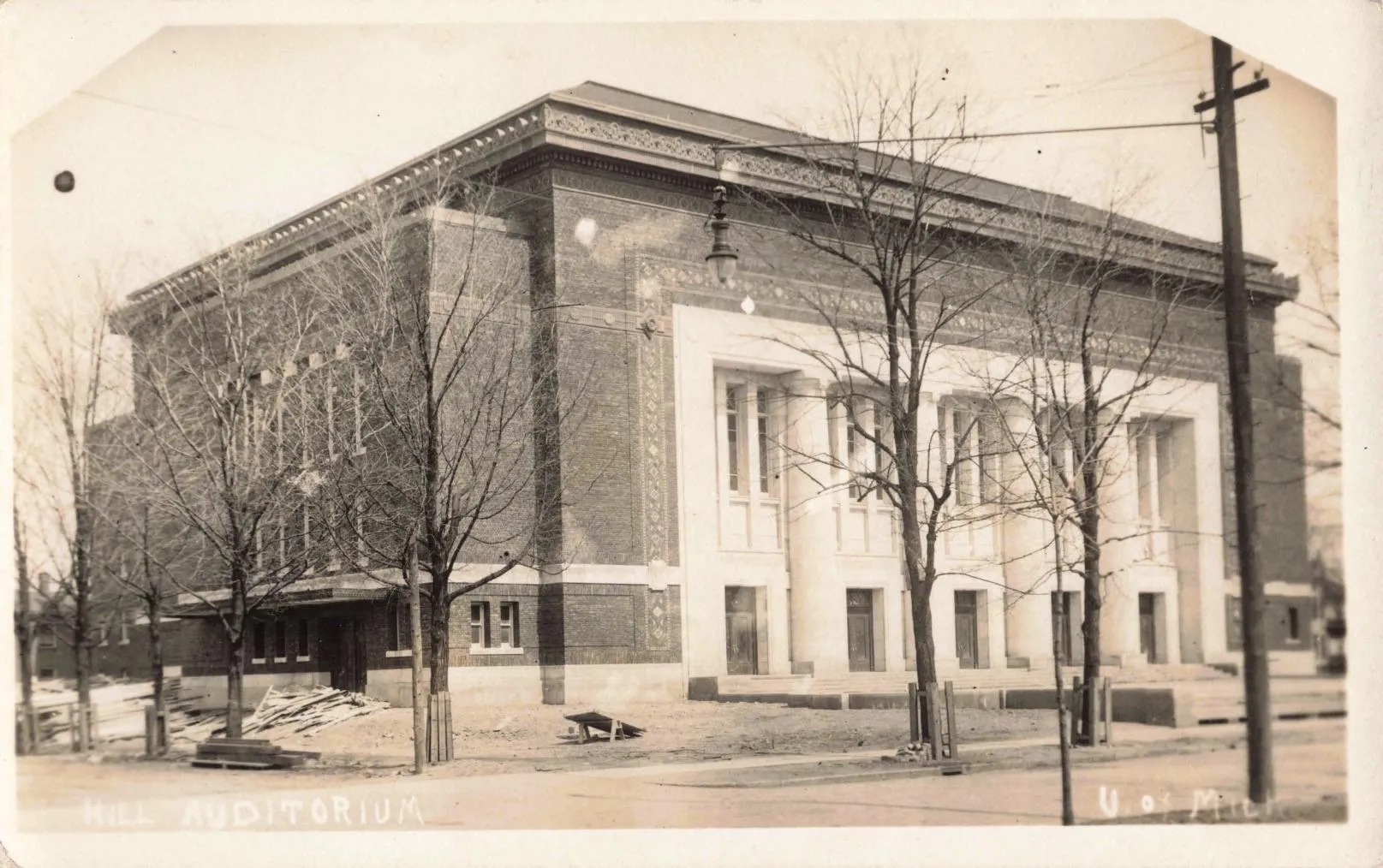
The University of Michigan expanded alongside the city. Hill Auditorium opened in 1913, hosting concerts and public events. Michigan Stadium followed in 1927, drawing crowds that reshaped Saturdays in Ann Arbor.
Photographs of fans singing “The Yellow and Blue” show early mass spectator culture. These gatherings were not only about sports. They were civic rituals that reinforced shared identity.
War, Prohibition, and Hardship
World War I brought pressure and division. German language programs closed. Breweries shut down when Michigan enacted Prohibition in 1918. Alcohol disappeared legally, though debate did not.
The Great Depression followed. Jobs vanished, but Ann Arbor endured better than many cities. Federal work programs funded public projects. Local manufacturers adapted. The university provided stability.
By 1940, the history of Ann Arbor Michigan told a clear story. This was no longer a small town shaped by a single institution. It was a layered city — educational, commercial, political, and civic.
Ann Arbor became what it was because people gathered, argued, invested, and acted in public view. The photographs make that plain.